The Silver Tsunami Has Arrived. The Opportunity Is in Execution.

By Carl Mittendorff
The most important question in senior living today is not whether demand is coming. It is who will be prepared to serve it with precision.
More than 10,000 Americans reach retirement age every day. By 2030, roughly one in five Americans is expected to be 65 or older. Even more important for this asset class, the 80-plus population (the age cohort most likely to need assisted living, memory care, and other forms of supportive housing) is expected to grow sharply over the next decade. At the same time, new development has slowed to historically low levels. That combination is creating one of the clearest supply-and-demand imbalances in commercial real estate.
For investors seeking current income, durable cash flow, and exposure to a needs-based asset class that is less tied to the same drivers shaping many public equities and conventional property sectors, senior living deserves serious attention. But investors should be careful not to mistake it for a simple real estate trade. The opportunity is real, yet so are the pitfalls. In senior living, the difference between a strong outcome and a weak one often comes down to one thing: operations.
That is because senior living is not simply real estate with older residents. It is a service-intensive operating business, housed inside a real estate asset. The building matters, of course, but the business inside the building matters far more, most of the time. That distinction is what makes the sector both compelling and unforgiving, and it is also why the best opportunities tend to belong to seasoned operators or “operator-investors” rather than generalists chasing a demographic theme.
The Demand Story Is No Longer Theoretical
The phrase “silver tsunami” has been used so often that it risks sounding like a slogan. It is not. It is simple arithmetic.
The United States is moving into one of the most visible demographic shifts in modern history. The 80-plus population is growing, families are aging into harder care decisions, and the need for supportive housing is expanding accordingly. This is not a short-term trend, and it is not a speculative story that depends on perfect timing. It is a long-duration demand wave that is already underway.
Senior living demand behaves differently from the demand drivers that underpin many other investments. Office demand can change with workplace patterns. Retail demand can change with consumer habits. Hotel demand can weaken with business travel, leisure spending, and oil prices. Apartment demand remains tied to affordability, wages, and household formation. Senior living, by contrast, is driven by age, health transitions, and necessity, all of which are durable and accelerating forces in the United States.
When families begin searching for assisted living or memory care, they are rarely making a discretionary lifestyle decision. They are responding to a change in circumstance that often cannot be postponed. A fall. A hospital discharge. Cognitive decline. Medication complexity. Social isolation. Caregiver burnout. Senior living can move from a future “maybe” to an immediate necessity very quickly, and that need does not disappear simply because the broader economy is under pressure.
That need-based demand profile is one reason the sector can show resilience through economic volatility. Families still need safe environments, quality care, and structured support for loved ones even when markets are unsettled. That does not mean senior living is immune to economic conditions. No asset class is. But it does mean the sector’s core demand driver is more durable and less discretionary than what supports many traditional commercial real estate categories.
For investors, that kind of visibility is increasingly valuable.
Underdevelopment Is Creating A Scarcity Premium
If favorable demographics were the only story, senior living would be interesting enough. The reason the opportunity is truly compelling is that supply has not kept pace with what is coming.
New development in the senior living space has fallen to historically low levels, with annual inventory growth running below 1 percent and only 809 units delivered in the second quarter of 2025. Current projections suggest that, if development continues at anything close to its recent pace, the industry could face a meaningful structural shortfall of nearly 370,000 units by 2030.
That would be notable in any property sector. In senior living, it is especially important because demand is accelerating while supply remains constrained.
The reasons are not hard to understand. Senior living is more difficult to finance, more expensive to build, more heavily regulated, and more operationally demanding than conventional multifamily housing. Construction costs remain elevated. Lenders have been cautious on new development. Entitlement and licensing processes vary by state and can be complex. Labor challenges continue to affect both construction and long-term operations. For many developers and generalist real estate investors, that is enough to send capital elsewhere.
But those same barriers that discourage new entrants also protect existing owners and disciplined capital providers. Underdevelopment does not simply create scarcity. It creates a moat around well-located communities that are already operating effectively, or that can be acquired and improved by experienced operating teams. In many markets, there is no new wave of supply on the horizon ready to dilute occupancy or put a cap on pricing power.
That is the heart of the opportunity. Senior living is not just benefiting from favorable demographics. It is benefiting from favorable demographics in a sector that has materially underbuilt supply against those demographics.
The Real Story Is Operational, Not Just Demographic
This is where many investors get the story half right.
They see the demographic wave. They understand the real estate component. They recognize the supply shortage. And then they assume the opportunity is largely about just being invested in the sector. That is the wrong lens.
In senior living, the operator is not a footnote to the investment thesis. The operator is the investment thesis.
Staffing stability, care quality, leadership, referral relationships, family communication, clinical compliance, sales conversion, pricing discipline, and local market reputation all have a direct impact on investment performance. In many real estate sectors, mediocre ownership can sometimes be rescued by rent growth, a favorable cycle, or cap-rate compression. In senior living, mediocre operations are far less likely to be forgiven. Families notice poor execution. Staff turnover amplifies poor execution. Referral networks eventually punish poor execution. Regulators notice poor execution too.
The reverse is also true. A strong operator can create substantial value even in assets that are underperforming at acquisition. Better leadership, better accountability, stronger sales discipline, improved labor management, sharper referral outreach, and tighter day-to-day execution can materially change both occupancy and margins over time.
We have seen this firsthand. In one of our recent investments, a five-asset senior living portfolio was around 60 percent occupied at acquisition, losing roughly $600,000 of annual cash flow. Our returns didn’t come from just “buying it right” or waiting for the market to rescue the investment. It came from our affiliate operator rebuilding the operating cadence: strengthening community leadership, restoring local referral momentum, improving accountability, and creating tighter execution at the property level. Within roughly three years, the portfolio was generating more than $5 million of annual net operating income. We refinanced that portfolio last year, returning more than 125 percent of initial equity to investors, effectively de-risking the deal, while preserving future upside.
We have also seen the reverse.
When operator alignment weakens, performance can deteriorate much faster than many investors expect. Occupancy slips. Staffing instability rises. Culture weakens. Local reputation suffers. Referral channels cool. Once that cycle begins, recovery is neither quick nor easy. That is why sponsor selection matters so much in this sector.
In senior living, the building can be the same. The market can be the same. The demographic tailwind can be the same. The outcome can still be radically different depending on who is actually operating the asset and how disciplined their culture and people systems are.
Why Performance Can Strengthen From Here
As occupancy recovers and new supply remains limited, pricing power improves. In senior living, that can be especially meaningful because the revenue model is more layered than a conventional apartment business. In a well-run community, performance is not driven by housing revenue alone. It can also include care fees tied to resident needs, ancillary service revenue, and community or move-in fees. That gives operators more levers to improve top-line performance than the typical annual rent increase available in many other property types.
That structure is part of why senior living can occupy a differentiated place in a broader portfolio. That is part of what makes senior living relevant in an uncorrelated portfolio discussion. Its revenue base is less tethered to the same variables that often dominate public markets and many traditional real estate sectors. It is not insulated from the economy altogether, but it does operate on a different axis.
This matters even more when one considers where the industry sits in its maturity curve. Senior living is institutionally recognized, but it remains fragmented. The largest operator still controls only a small share of total inventory. That fragmentation creates room for consolidation, operational improvement, and differentiated sponsorship. In other words, the market has identified the theme, but not everyone has figured out how to capitalize on it properly. That gap is often where the most attractive opportunities exist.
The Opportunity Belongs To Operators Who Can Execute
The next phase of senior living investment will not be defined merely by access to capital. Capital alone is not scarce. What is scarcer is disciplined capital paired with expert operational judgment.
That distinction is becoming more important, not less. As more investors begin to appreciate the magnitude of the demographic shift, more capital will continue to move toward the sector. But the investors most likely to benefit will be the ones who enter with the right framework before the space becomes more crowded, more efficiently priced, and more competitive for quality opportunities.
Senior living offers a rare combination of characteristics: current income potential, appreciation tied to a durable demand imbalance, relative insulation from some of the broader economic forces affecting other sectors, and meaningful social utility. It is one of the few areas where investors can pursue attractive risk-adjusted returns while also helping meet a real and growing human need.
That is the lens through which we view the sector at the Voralto Senior Living Fund. We know better than to treat senior living as a generic demographic trade, and we also know not to think about the asset class as though real estate alone will do the heavy lifting. Durable value is created in senior living where demographic certainty, supply scarcity, and operational excellence intersect. That is why we approach senior living as an operator-led investment strategy first and a real estate strategy second, supported by disciplined systems, data, and hands-on execution.
The Silver Tsunami is not a catchy phrase, and it is not a passing narrative. It is one of the clearest long-duration demand stories in alternative investments and commercial real estate today. Demand is already here. Supply remains constrained. The opportunity is real.
The more important question is not whether senior living will matter. It will. The more important question is which teams have the multi-decade experience, discipline, and operating capabilities to convert that demand into durable value for residents, families, and investors.
For those evaluating where demographics, defensiveness, and operator-led value creation can converge, senior living may be one of the most important conversations to start now rather than later.
If you are attending Uncorrelated Puerto Rico or Beverly Hills, I would welcome the opportunity to compare notes.
About the Author
Carl Mittendorff is a seasoned senior living investor, operator, and developer with more than 21 years of experience in the sector and involvement in more than $3.8 billion of senior living investments across acquisitions, developments, recapitalizations, and turnarounds. He leads the Voralto Senior Living Fund (www.voralto.com), an operator-led investment platform with roots dating back to 1977. Voralto combines long-standing operating discipline with modern systems, analytics, and practical AI-enabled tools designed to strengthen leadership, labor management, marketing execution, and day-to-day performance across senior living communities.
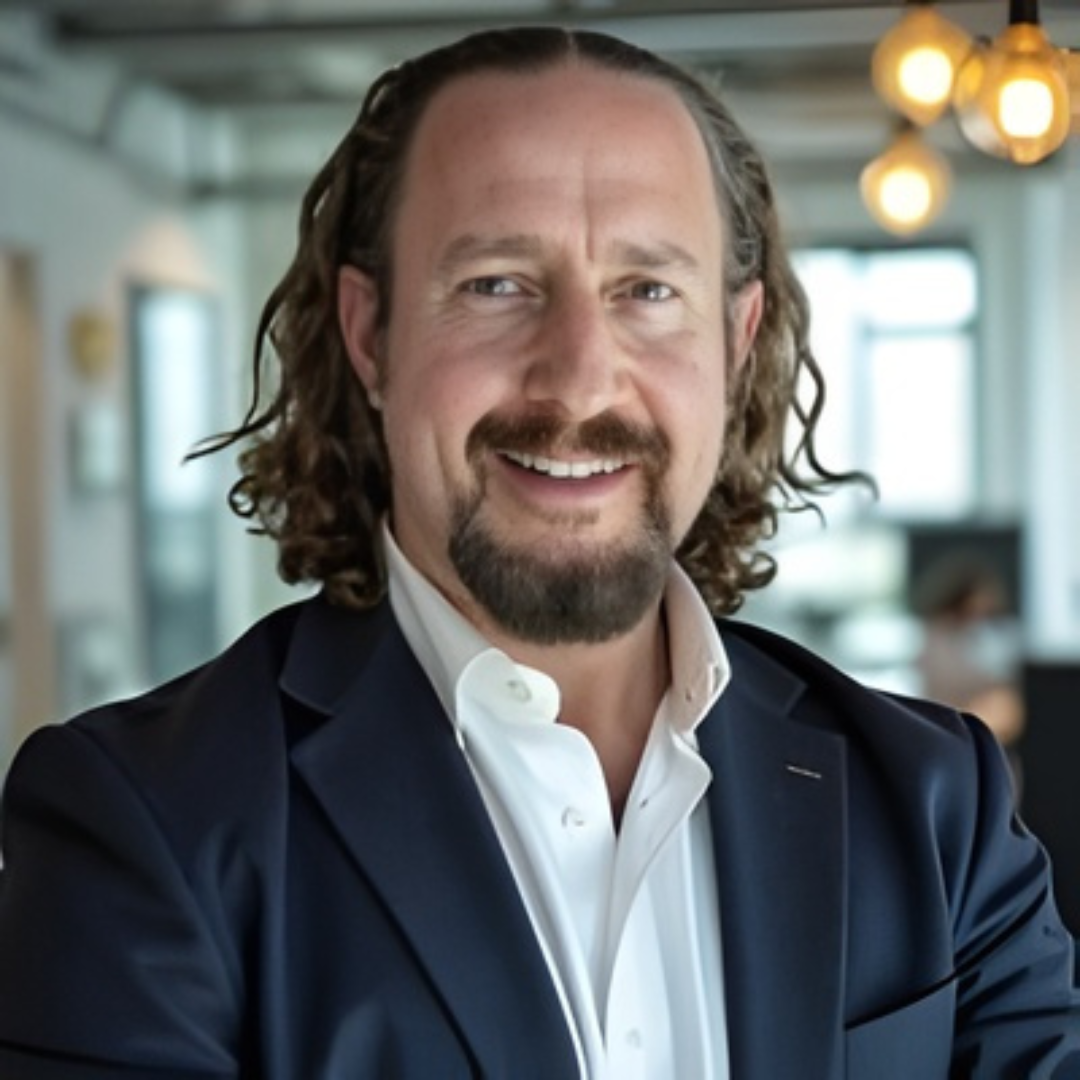
Carl Mittendorff
Managing Partner
Voralto Senior Living Fund
Capitalize on the Silver Tsunami with an Operator-Led, AI-Integrated Senior Living Fund.
The Voralto Senior Living Fund is focused on opportunities where disciplined operations, applied data science, and proprietary sourcing drives outsized investment returns.
Most real estate funds depend on third-party operators to execute the plan. We are different. Our strategy combines hands-on operating expertise with modern analytics, machine learning, and frontier artificial intelligence tools designed to improve how we source deals, evaluate opportunities, drive sales and marketing, manage labor, sharpen pricing, strengthen local demand generation, and monitor operational performance.
We do not rely on financial engineering alone. We invest where better leadership, better systems, better data, and better execution can materially improve results.