Unlocking Value from Life Insurance Policies

How Life Settlements Create Opportunities for Seniors and Asset Investors
“[L]ife insurance has become in our days one of the best recognized
forms of investment and self-compelled saving. So far as reasonable
safety permits, it is desirable to give to life policies the ordinary
characteristics of property…
To deny the right to sell except to persons having such an [insurable]
interest is to diminish appreciably the value of the contract in the
owner’s hands.”
— United States Supreme Court, Grigsby v. Russell, 222 U.S. 149 (1911)
Every year, seniors across the United States make a decision that costs them — on average — hundreds of thousands of dollars. They lapse or surrender a life insurance policy they no longer want, need, or can afford, and walk away with nothing, or with a fraction of the policy’s fair market value. Based on life insurance company industry data, between eight and ten million seniors each year are faced with lapsing or surrendering their life insurance policies that could qualify for a life settlement.[1] Those policies have real economic value — for the senior and their families, as well as for asset investors. Under more than a century of settled law — affirmed by the Supreme Court in Grigsby v. Russell — a life insurance policy is personal property, freely tradeable and assignable like any other financial asset its owner holds.
Asset investors have increasingly recognized life settlements — the sale of an in-force policy by its owner to a third-party investor — as a distinct and durable asset class. The opportunity is large, the demographics are favorable, and the supply is growing. What has held the market back is not supply of assets but operational friction that made the small-and-mid-size policy segment — which is the vast majority of the addressable market — economically impractical. That friction is now being addressed, by Lighthouse Life.
Why Life Settlements Are an Uncorrelated Asset
The defining feature of life settlement investment is the source of the return. Cash flow is triggered by mortality — the timing of one biological event on a contract whose payment is obligated by an A-rated U.S. life insurance carrier. It is not driven by interest rates, equity earnings, credit spreads, oil prices, or geopolitics.
That distinction has practical investment consequences. A 2022 Society of Actuaries study found statistically insignificant correlation between life settlement fund performance and the S&P 500, U.S. Treasury yields, and commercial real estate indices.[2] Mortality does not move with macro variables; it follows actuarial tables.
That is why allocators have increasingly treated life settlements as part of the “resilience bucket” — alongside private credit and infrastructure — as a structural counterweight to public-market volatility.[3] Conning’s 2025 Life Settlements Investor Sentiment survey of 256 institutional respondents found that 88% of current investors plan to maintain or increase their allocations, 65% plan to increase by more than 1.5x, and 15% intend to more than double. Institutional satisfaction is high: 53% of current investors rate their life settlement allocations nine or ten out of ten, and 34% of respondents plan to make their first life settlement investment in 2026.[4]
A second source of resilience is what backs the contract. The carriers issuing policies that asset investors acquire through the life settlement market include MassMutual, MetLife, AIG, Lincoln Financial, Equitable, Transamerica, and Mutual of Omaha — issuers whose risk-based capital ratios sit above the broader life insurance industry average. The death-benefit obligation is theirs. The asset is paid by a highly rated counterparty, the timing is mortality-driven, and the regulation is mature. That combination is unusual among alternatives.
The Market Opportunity
The supply underpinning this asset class keeps growing. The U.S. age-65-plus population will continue expanding through 2040, reaching roughly 81 million Americans by then.[5] Conning estimates the addressable market — net death benefit on senior-held in-force policies that could qualify for life settlement — at approximately $224 billion annually, or $2.4 trillion over the next decade.[6]
Against that potential, approximately $4.72 billion transacted in the most recent year — the highest level since 2010, a mere rounding error against the addressable pool of lapsing and surrendering policies owned by seniors.[7] Current annual life settlement volume represents significantly less than 0.5% of in-force net death benefit.[8] The market is operating at roughly two percent of its potential.
The gap exists for one principal reason: complexity. Historically, even a small-face-value policy required a minimum six-week underwriting process — carrier illustrations that took three weeks, life expectancy reports that took four to six. The unit economics of the legacy life settlement market only worked on the largest cases. The average in-force U.S. senior policy carries a death benefit of just $150,000.[9] Most of them have been ignored. Industry data shows the average life settlement transaction face value at approximately $1.36 million — a clear reflection of where the intermediary market has historically chosen to play, and where the market opportunity exists.[10]
The underserved middle of the market — policies with face amounts between $100,000 and $1 million — is where the largest pocket of trapped value sits. Lighthouse Life estimates that segment alone at approximately $85 billion of net death benefit annually.[11] Closing the gap between $4 billion transacted and $224 billion of annual potential is, at its core, an operational problem.
Unlocking the Margin
The traditional life settlement transaction looks more like a real-estate deal from the 20th Century than a financial-technology transaction in 2026. A broker sources the policy. A provider marks it up. A separate valuation vendor prices it. A separate servicing vendor handles premiums and mortality tracking. A separate audit firm checks carrier statements. A separate portfolio-management system holds the data. Each intermediary takes a fee. By the time an investor owns the asset, the friction has compressed the spread.
The thesis behind LHL Strategies, Inc. — the parent of Lighthouse Life — is that vertical integration eliminates most of that friction, and that what gets eliminated flows to the asset investor in the form of higher net yield.
LHL is a vertically integrated provider of assets, services, and solutions for longevity-risk investors worldwide. Through its subsidiaries, the firm operates across the full life cycle of a policy. Lighthouse Life Solutions acquires policies directly from seniors in the regulated life settlement market and resells them to asset investors worldwide. ClearLife Limited, LHL’s wholly owned subsidiary, operates the leading cloud-based software and data platform for asset managers and market participants to value and manage life policy portfolios. ClearLife Servicing handles ongoing asset-servicing functions. The firm is investing in AI-driven underwriting, operational efficiency, and consumer experience, drawing on one of the largest proprietary data sets of policy and health information in the industry.
That integrated stack matters for two reasons. The first is speed. The traditional life settlement underwriting process takes four to ten weeks. LHL’s AI-driven approach is converging on zero to two days, with a goal of instant offers comparable to the experience consumers already have in adjacent consumer-finance categories. Lead intake, premium modeling, mortality screening, medical record review, life expectancy assessment, and offer generation — each step that historically required hand-off between siloed parties — is being collapsed into a single integrated workflow. In a market where the seller is comparing one provider’s offer against another, speed is the competitive advantage that turns pipeline into closings.
The second reason is what speed and integration unlock economically. Because LHL owns origination, valuation, servicing, and portfolio infrastructure, each policy generates revenue at multiple points in its life cycle while removing the intermediary fees that historically compressed investor returns. The same underlying asset, with the same death benefit and the same carrier counterparty, can yield more to the uncorrelated asset buyer simply because fewer hands have touched it on the way. That is the margin Lighthouse Life is built to unlock.
LHL focuses on policies with a death benefit between $100,000 and $1 million — the underserved segment that intermediaries built around large cases have historically ignored, and where vertical integration changes the unit economics most. Policy acquisitions have grown for four consecutive years, and the firm expects to rank among the top three life settlement companies in the United States in 2026.
The Setup From Here
The case for life settlements as an institutional asset class has matured. In 1911, the Supreme Court held in Grigsby v. Russell that a life insurance policy is personal property — freely tradeable, assignable, and saleable — entitled to the same protections as any other financial asset. That legal foundation has never been challenged. The Society of Actuaries quantified the lack of correlation with public markets. Conning has documented rising asset allocations. State regulators have produced a multi-year run of low consumer complaint rates.[12] And the demographic supply — 81 million Americans aged 65 and older by 2040 — keeps growing.
What remains is execution at scale. The next phase of the market belongs to firms that can source policies in the segment everyone else ignored, underwrite them in days rather than weeks, and deliver them to alternative asset investors without the fee stack that historically captured the spread. That is the operational opportunity Lighthouse Life is built to capture — and the opportunity allocators evaluating the resilience bucket should be sizing now.
About the Author
Michael Freedman is Co-Founder and Chief Executive Officer of Lighthouse Life. He has spent more than 25 years as a senior executive in the life settlement market and was the driving force behind the enactment of every state and federal law currently governing life settlements, including more than 60 individual statutes. He is Past Chair of the Public Policy Council of the Life Insurance Settlement Association (LISA).
[1] American Council of Life Insurers, 2025 Fact Book, p. 92, Table 7.1; p. 94, Table 7.4.
[2] Society of Actuaries, study on life settlement fund correlation with major asset classes, 2022.
[3] Conning, Inc., Unlocking Value: Insights into Life Settlements Investment Trends (December 2024).
[4] Conning, Inc., Life Settlements Investor Sentiment 2025 (December 2025).
[5] Administration for Community Living, Projected Future Growth of Older Population (May 5, 2022).
[6] Conning, Inc., Life Settlements: A Pause for Now (November 2025).
[7] LISA's 2025 Annual Market Data Released, May 19, 2026 (https://www.lisa.org/article_content.asp?edition=3§ion=4&article=49).
[8] Conning, Inc., Life Settlements: Steady On (November 2024); industry data on 2024 aggregate face value transacted.
[9] American Council of Life Insurers, 2025 Fact Book.
[10] Donna Horowitz, “Life Settlement League Tables,” TheDeal.com, June 9, 2025.
[11] Lighthouse Life internal estimate.
[12] NAIC, Closed Confirmed Consumer Complaints by Reason, https://content.naic.org/cis_agg_reason.htm.
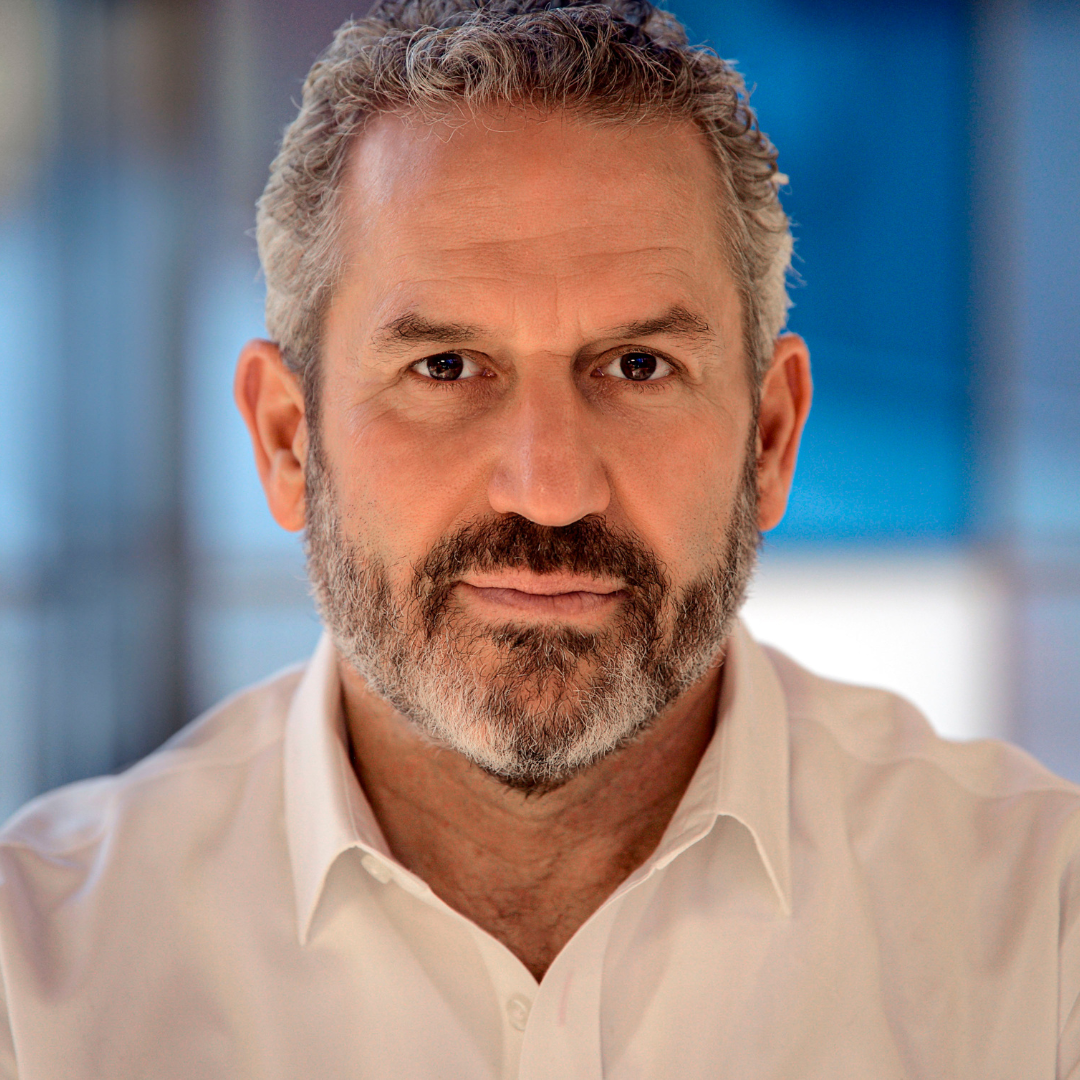
Michael Freedman
Co-Founder & CEO
Lighthouse Life
LHL Strategies, Inc. is a vertically integrated provider of life policies and life policy services to longevity-risk asset managers and investors. LHL delivers value to consumers and investors through fast, efficient, and transparent life settlement transactions, and provides full lifecycle life policy services to asset investors worldwide. LHL companies include Lighthouse Life Capital, LLC, Lighthouse Life Solutions, LLC, Lighthouse Life Direct, LLC, Harbor Life Settlements, LLC, Settlement Benefit Holdings, ClearLife Limited and its subsidiary, ClearLife LLC. LHL.