Navigating the New Macro Regime: Why Hong Kong is the Crucial Anchor for Risk Diversification
By King Leung
For the better part of four decades, institutional allocators operated under a relatively reliable set of assumptions. The global economy was characterised by the ‘Great Moderation’—a prolonged period of low inflation, steady growth, and accommodative monetary policy. In this environment, portfolio construction was straightforward: equities provided the growth engine, whilst sovereign bonds acted as the ballast. The negative correlation between the two asset classes was the bedrock of modern portfolio theory, allowing the traditional 60/40 portfolio to deliver consistent, risk-adjusted returns with minimal structural volatility.
Today, that paradigm has fundamentally fractured.
We have entered a new macroeconomic regime defined by structural inflation, geopolitical fragmentation, and the end of zero-interest-rate policies. As central banks in Western markets have pivoted to aggressive tightening cycles to combat sticky inflation, the historical negative correlation between equities and fixed income has broken down. In 2022, allocators witnessed a simultaneous, double-digit drawdown in both asset classes—a stark wake-up call that traditional diversification models are no longer sufficient. Furthermore, as Western markets become increasingly synchronised in their economic cycles and monetary policy responses, cross-asset correlations have spiked. Finding genuine, uncorrelated return streams has transitioned from a theoretical luxury to an absolute fiduciary necessity.
For sophisticated allocators, family offices, and fund managers, the search for true diversification—idiosyncratic growth that does not simply mirror the beta of the S&P 500 or the yield curve of US Treasuries—points inevitably towards the East. The Asia-Pacific (APAC) region is decoupling from Western economic cycles, driven by intra-regional trade, a burgeoning middle class, and distinct monetary policy trajectories. However, accessing this structural alpha requires more than just capital; it requires an operational anchor that offers stability, regulatory rigour, and deep institutional liquidity.
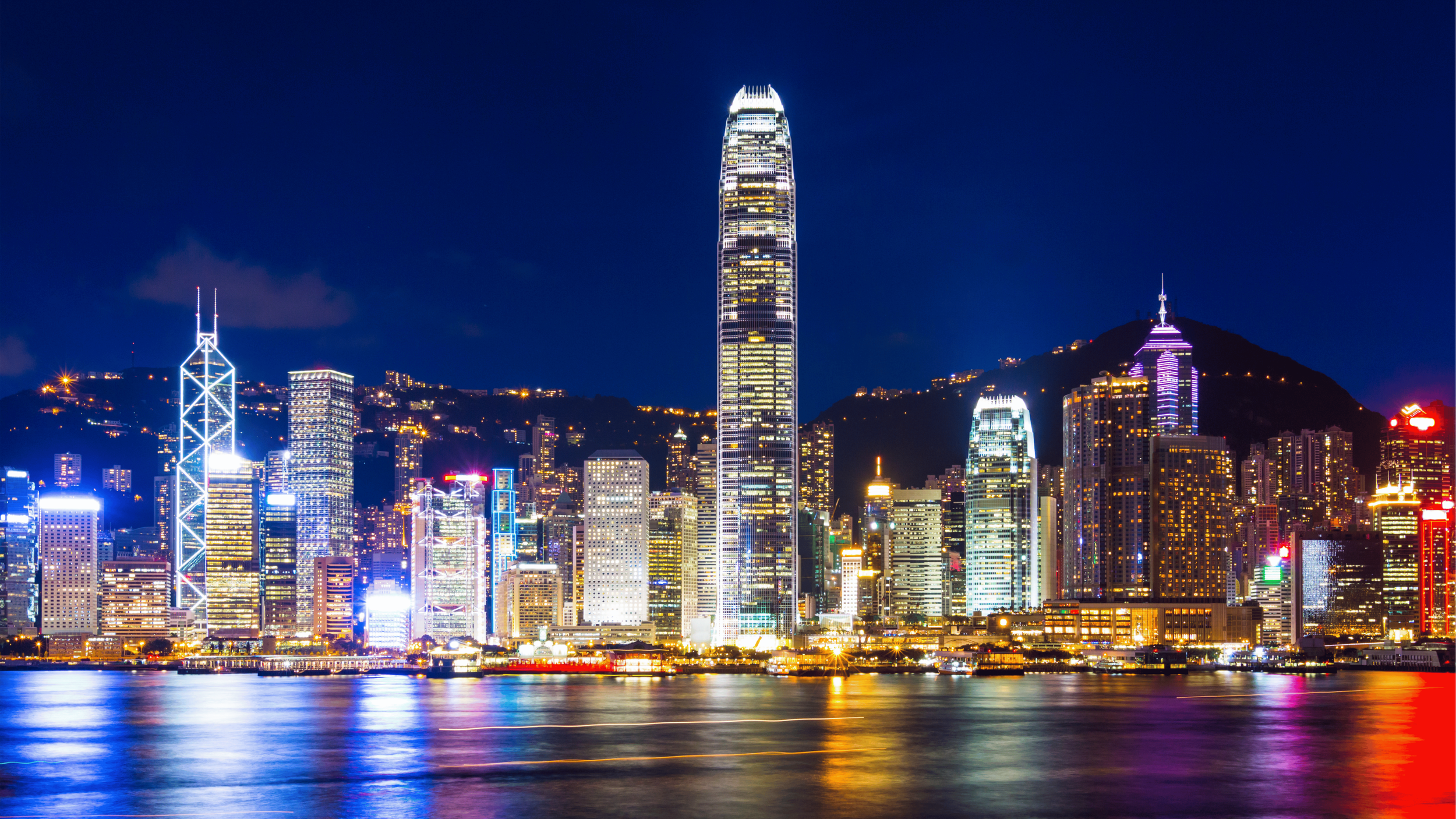
In this multipolar economic reality, Hong Kong has re-emerged not merely as a regional financial hub, but as the indispensable super-connector for global capital seeking uncorrelated returns. Hong Kong is tipped to be world’s top financial centre amid China’s push to internationalise yuan’s reach.
The Search for Idiosyncratic Growth
To understand why capital is migrating, one must first analyse the shifting macroeconomic tectonic plates. In the United States and Europe, the focus remains heavily on managing the trailing edge of inflation, managing debt burdens, and navigating the transition to a higher-for-longer interest rate environment. These factors have compressed equity risk premiums and made traditional public markets highly sensitive to central bank signalling.
As the technology from China – new/renewable energy, life science, AI, robotics, etc. are increasingly recognized for their worldclass level by international investors, and many of these companies have their IPOs in HK. HK becomes the central hub to access these world-leading new economy companies. Notable examples include CATL, Zhipu, Minimax.
The economic narrative in Asia is fundamentally different. The region is experiencing a distinct cycle. Inflationary pressures have been notably more subdued, allowing policymakers greater flexibility to support growth rather than suppress demand. Furthermore, the economic drivers in Asia are increasingly structural rather than cyclical. The transition towards high-tech manufacturing, the rapid adoption of green energy technologies, and the digitisation of consumer economies are creating vast pools of idiosyncratic growth.
However, Asia is not a monolith. It is a highly complex, fragmented landscape of emerging, frontier, and developed markets, each with its own regulatory regimes, currency risks, and capital controls. For a global allocator sitting in London, Zurich, or New York, deploying capital directly into these disparate markets carries a high degree of operational and jurisdictional risk.
This is the precise friction point where Hong Kong’s value proposition becomes unparalleled. It serves as the ultimate risk-mitigation bridge. It allows global capital to access the high-growth, uncorrelated opportunities of the APAC region—and specifically the vast scale of Chinese Mainland—whilst remaining firmly anchored within a familiar, world-class regulatory and legal framework.
Jurisdiction, Rule of Law, and Capital Fluidity
Institutional capital is inherently pragmatic; it flows to where it is treated best, protected most rigorously, and allowed to move most freely. Hong Kong’s enduring status as a premier global financial centre is built upon a foundation that cannot be easily replicated: the "One Country, Two Systems" framework.
This constitutional principle guarantees that Hong Kong maintains its own distinct economic, legal, and social systems. For the international allocator, one of the most critical element of this framework is the preservation of the common law system. Hong Kong is the only common law jurisdiction within China. For private equity firms executing complex cross-border buyouts, or hedge funds engaging in sophisticated derivatives trading, the predictability, transparency, and enforceability of common law are non-negotiable prerequisites. Contracts are interpreted with legal certainty, and disputes are resolved by an independent judiciary that includes eminent jurists from other leading common law jurisdictions around the globe.
Coupled with this legal certainty is the absolute free flow of capital. Unlike many emerging markets where capital controls can trap liquidity during times of stress, Hong Kong maintains a fully open capital account with no restrictions on inward or outward fund movements.. Furthermore, the Hong Kong Dollar (HKD) remains firmly pegged to the US Dollar (USD) since 1983 under a robust Linked Exchange Rate System (LERS), providing a stable monetary anchor.. In an era of heightened currency volatility, this peg provides a crucial layer of stability. It allows US and European allocators to underwrite Asian growth opportunities without taking on unhedged, outsized emerging market FX risk.
A Deep Institutional Ecosystem
A financial centre is ultimately defined by the depth of its ecosystem and the calibre of its participants. In this regard, the data speaks volumes about where smart, agile capital is positioning itself.
Hong Kong currently manages an astounding HK$35.1 trillion (approximately US$4.5 trillion) in assets under management (AUM). It ranks as the largest hedge fund centre in Asia and the second-largest private equity centre in the region. These are not merely vanity metrics; they represent a powerful network effect. When an allocator deploys capital through Hong Kong, they are plugging into a mature ecosystem of top-tier prime brokers, global custodians, elite legal practices, and specialised accounting firms. The infrastructure required to support complex, multi-strategy institutional mandates is already fully operational and battle-tested.
Perhaps the most compelling leading indicator of Hong Kong’s future trajectory is the rapid influx of family offices. A recent comprehensive study conducted by Deloitte revealed that there are currently 3,384 single-family offices operating in Hong Kong – recording an increase of 681 over the past two years.
Family offices are widely considered the "canaries in the coal mine" for global capital flows. Unlike institutional pension funds, which are often constrained by rigid, multi-year asset allocation models and bureaucratic investment committees, single-family offices are highly agile. They possess the flexibility to look past short-term market noise and allocate capital based on long-term, secular trends. The fact that hundreds of the world’s most sophisticated families are choosing to domicile their wealth in Hong Kong is a profound vote of confidence.
This migration is being driven by the greatest intergenerational wealth transfer in history, particularly within Asia. As first-generation wealth creators transition their businesses and assets to the next generation, there is a pronounced shift towards institutionalising that wealth. These families are setting up sophisticated structures in Hong Kong to co-invest alongside top-tier private equity GPs, access exclusive private credit deals, and diversify their holdings across global markets. For international fund managers, this represents a massive, highly concentrated pool of potential LP capital that is actively seeking deployment.
The Super-Connector to the Greater Bay Area and Beyond
Whilst Hong Kong is a global hub, its immediate proximity to, and integration with Chinese Mainland remains its most potent structural advantage. Hong Kong is the undisputed super-connector between the world and the world's second-largest economy.
Through pioneering mechanisms such as the Stock Connect, Bond Connect, and the recently expanded Wealth Management Connect, Hong Kong provides the most efficient, liquid, and regulated channels for two-way capital flows between Chinese Mainland and the rest of the world. As China transitions its economy towards high-value sectors such as advanced manufacturing, biotechnology, and green technology, the nature of the investment opportunity is evolving.
Furthermore, Hong Kong is the central financial artery for the Guangdong-Hong Kong-Macao Greater Bay Area (GBA). The GBA is an economic powerhouse with a population of over 87 million and a GDP equivalent to that of a top-ten global economy. It is home to some of the world’s most innovative technology hardware and electric vehicle manufacturers. By establishing a presence in Hong Kong, allocators and fund managers gain direct, frictionless access to the deal flow, talent, and capital originating from this hyper-growth region.
Regulatory Catalysts in Private Markets and Web3
To remain at the forefront of global finance, a jurisdiction cannot merely rely on its historical advantages; it must actively innovate to capture the next wave of financial evolution. The Hong Kong government and its financial regulators have demonstrated a clear, proactive commitment to institutionalising emerging asset classes, providing the regulatory clarity that allocators crave.
Two specific catalysts highlight this forward-looking approach, both of which are highly relevant to the search for uncorrelated returns: private credit and digital assets.
Following the retrenchment of traditional banks from middle-market lending, private credit has exploded into a multi-trillion-dollar global asset class. In Asia, the structural demand for bespoke, flexible financing solutions is immense, yet the private credit market remains relatively nascent compared to North America and Europe. This supply-demand imbalance creates a highly attractive premium for private debt investors. Recognising this opportunity, Hong Kong is set to implement significant expansions to its tax concession regimes in 2026. These enhancements are specifically designed to encompass private credit and debt investments, providing a highly tax-efficient environment for global credit funds to structure their Asian operations and originate loans.
Simultaneously, Hong Kong is positioning itself as the premier, regulated hub for the institutionalisation of digital assets and Web3 technologies. Whilst other jurisdictions have struggled with regulatory ambiguity or resorted to regulation-by-enforcement, Hong Kong has taken a fundamentally different path. The Securities and Futures Commission (SFC) has established a comprehensive, transparent, and rigorous licensing regime for virtual asset trading platforms.
For institutional allocators, The upcoming 2026 tax concessions will also extend to digital assets, further solidifying Hong Kong’s status as the jurisdiction of choice for forward-thinking alternative asset managers.
The Strategic Imperative
The era of easy beta is over. The macroeconomic tailwinds that propelled the 60/40 portfolio for decades have reversed, replaced by a complex landscape of sticky inflation, geopolitical realignment, and elevated cross-asset correlations. In this challenging new regime, the role of the allocator has never been more demanding. Generating sustainable, risk-adjusted returns requires a fundamental rethink of portfolio construction and a willingness to seek out genuine, structural diversification.
The Asia-Pacific region offers the idiosyncratic growth and uncorrelated return streams that modern portfolios desperately require. However, accessing this growth demands a sophisticated operational anchor.
Hong Kong provides the perfect synthesis of East and West. It offers the unparalleled growth potential of the Greater Bay Area and broader Asia, combined with the ironclad legal certainty of a common law jurisdiction, the stability of a US Dollar peg, and the deep liquidity of a world-class financial ecosystem. With proactive regulatory enhancements on the horizon for private credit and digital assets, and a rapidly expanding base of agile family office capital, the infrastructure for the next generation of wealth creation is already in place.
For the sophisticated fund manager or institutional allocator, Hong Kong is no longer just an option for regional expansion; it is a strategic imperative for global portfolio diversification and rebalancing.
King Leung
Global Head of Financial Services, FinTech & Sustainability
InvestHK
Invest Hong Kong (InvestHK) is the investment promotion agency of the Government of the Hong Kong Special Administrative Region (HKSAR). It supports overseas and Chinese Mainland companies and institutions, from multinational corporates to startups, to plan, set up their business in Hong Kong, and to expand their operations and international reach via Hong Kong. It collaborates with investment promotion agencies from around the world to facilitate this two-way investment.