
By Danielle Pienaar
Coming from traditional finance and moving into digital asset directorships years ago taught me one thing very quickly: It’s not just a different asset class; it has vastly different plumbing.
I was once copied on an email chain where an investment manager shared the private keys to the wallet that was intended to be holding the fund's entire portfolio. Not a test wallet. Not a spare. The sole wallet proposed to hold all assets — sent by email, unencrypted, to several recipients. The Investment Manager, the Administrator and the other independent director had no objection to using that wallet. Hair standing on the back of your neck yet?
This story captures something important about governance in digital asset structures. The people involved were not villains. They were bright, enthusiastic and moving quickly and nobody had ever stopped to think if the fund's keys are controlled in line with the fund’s policies.
Oversight is the board's job – and, in that situation, my job to step in and manage the immediate damage. Tokenization has changed a great deal about how funds are built, but it has not changed what directors are there to do. The duties are the same. Only the plumbing is new.
Tokenized funds: Cayman puts it in statute
For several years, tokenized funds in Cayman operated in a grey area. The key question was whether issuing a fund interest as a token amounted to a virtual asset issuance under the Virtual Asset (Service Providers) Act. In 2026, the legislature answered it. The Mutual Funds, the Private Funds and the VASP Act, confirmed that the issuance of fund tokens by a CIMA-regulated tokenised fund is not, in itself, a virtual asset issuance. A fund providing virtual asset services to third parties remains subject to the VASP regime.
This is not the start of tokenized funds in the jurisdiction. It provides greater clarity around the regulatory treatment of tokenized funds, their registration requirements, allows greater disclosure of risks together with how those risks are mitigated and allows CIMA access to information it requires.
7,000 Investors Later: Governance Lessons from Liquidating a Tokenised Fund
I was on the board of directors governing the liquidation of a retail tokenized fund with around 7,000 investors. If you want to understand where the risks in tokenized funds really sit, there is no better education than scenarios where things went wrong.
One of the hardest parts was investor data and regulatory compliance. Before returning money to 7,000 investors, you need to know who they are, whether they have completed the KYC requirements, where the money is going, whether they have access to the wallets on file and what tax reporting obligations apply to each investor.
If the smart contract does not aggregate the data accurately or the gap analysis and smart contract audit had oversights, every gap in the original onboarding had to be remediated after the fact. That becomes significantly harder when investors have moved, changed wallets or bought their tokens from someone else or did not have access to their email address on file.
The lesson was simple: in a tokenized fund, AML and tax compliance need to work together from the first day one. Tokenization makes weaknesses in those processes much harder to fix later.
A secondary market creates another challenge. Where equity tokens can be traded with third parties outside of the fund’s control, the fund may struggle to meet its legal and regulatory requirements around knowing and approving investors. That can make liquidity harder to achieve and limit marketability.
The risks to manage in a tokenized fund
1.AML, investor and tax data
One of the most important risks is maintaining effective AML and investor due diligence when fund interests can move through digital wallets.
Tokenization makes fund interests easier to transfer, which is much of its appeal, but every transfer can also mean a change in beneficial ownership. If the operator is not approving transfers and screening the incoming investor and wallet, the fund can quickly lose track of who it is dealing with.
The tax side is equally as important. Cayman funds have reporting obligations under FATCA and the Common Reporting Standard, and those obligations rely on complete and accurate investor information and self-certifications. As the amended CRS and the OECD's Crypto-Asset Reporting Framework take effect, the quality of that information will become increasingly important.
2. Structure
It pays to set the structure up correctly from the outset, starting with the choice of jurisdiction.
With the updated Mutual Funds, Private Funds and VASP Acts providing greater clarity around the treatment of tokenized funds, the Cayman Islands provides a trusted regulatory foundation. That removes an uncertainty that previously had to be resolved with legal opinions.
Restructuring a live tokenized fund with thousands of investors is far harder than getting the structure right at launch, particularly when changing jurisdictions and applying new legal requirements and regulations.
3. Continuity and key-person risk
What happens if the key people disappear - or worse, commit fraud?
Can the fund continue to operate, value its assets, process transfers and pay investors without them?
This is especially difficult when the technology has been built in-house. If only the founders or key staff at the investment manager build the smart contracts, hold the admin keys or know how the token register reconciles with the administrator’s records, the fund has a single point of failure.
Boards should insist on proper documentation, independent access and a credible plan for operating the fund if the original team is no longer there.
4. Service providers
This is where my opening story comes in.
Choose service providers carefully and test their controls rather than simply accepting their assurances. Custody arrangements, key management, transfer agency and administration all require people who understand both the regulatory obligations and underlying technology.
A manager who emails private keys is not just a security risk. It may also indicate that the people involved do not understand the technology and its associated risks.
5. Board attention and time
A tokenized fund needs more attention than a couple of board meetings a year. Transfers, investor onboarding, smart contract changes and technology incidents do not follow a quarterly calendar.
A hands-off independent director who only responds when contacted and does not ask questions may not be able to identify and mitigate risks in time.
This is where independent governance becomes crucial.
From the 2013 wake-up call to now
Cayman's governance story has a clear starting point. In early 2013, CIMA commissioned a survey of 179 hedge fund managers, investors, directors and service providers.
Industry stakeholders identified having directors with sufficient knowledge and experience, director independence and ensuring directors had sufficient time to fully apply themselves to every board as the most important factors. Independence was rated essential by 61% of respondents.
The market followed. According to a 2025 Walkers white paper, around 85% of new Cayman fund launches they handle had independent directors that year. The shift could have stemmed from CIMA's Rule on Corporate Governance, requiring every member of a fund's operator to exercise independent judgement and manage conflicts under a written policy.
It also means that having an independent director no longer tells an investor very much. The more useful question is what kind of independent director the fund has.
The more useful question is: what kind of independent director does the fund have?
When appointing a director to a digital asset structure, experience matters. The director needs to understand the structure, the technology the risks that come with it — and, importantly, understand how those risks can be mitigated is pivotal.
I have been on a board where another director approved a multi-sign blockchain transaction without reviewing the receiver’s wallet detail. The transfer went to the incorrect wallet, and the funds were not recoverable.
Accountants understand the importance of a second set of eyes. A director is not simply a signatory; they are also a reviewer.
Once a transaction is made on the blockchain, recovering funds can be extremely difficult, particularly where the receiving wallet is not controlled by a known party. In this case, the transaction was inconsistent with the banking and wallet policies and procedures. A lack of understanding of the underlying technology and the importance of a second set of eyes created a very real risk.
One of the biggest weaknesses identified in the 2013 survey was "director capacity" - how many boards one person can sensibly sit on. Nearly half of the investors and directors surveyed could not even establish how many other directorships their own fund's directors held.
How many boards is too many?
The debate around director capacity has never really been settled.
There are directors in the market with exceptionally large books of appointments. I always advise clients to ask how many directorships a prospective director holds before engaging them. But there is no magic number.
Capacity matters because it directly affects the service a director can provide. The right number depends on the complexity of the clients, their industries, structures and businesses. What matters is whether the director has the capacity to properly perform the role.
If you want an independent director who asks questions, challenges valuations, analyses and mitigates risk, oversees service providers, ensures filings and regulatory deadlines are met, understands the business and its operations, and is available when something goes wrong, you need to consider how much capacity they realistically have.
A director with a very large book may have limited capacity beyond attending the required meetings, reviewing papers and signing minutes. A director with a deliberately smaller book can provide more active oversight — understanding the business, challenging decisions, identifying risks, ensuring the fund operates within its offering documents and being available when issues arise.
The important thing is understanding what you need from your director and whether the person you appoint has the capacity and experience to deliver it.
When appointing an independent director, ask the uncomfortable questions.
How many directorships do you currently hold? Will you personally deal with my queries, or will they be delegated to your team? What is your approach to the role? What relevant experience do you have? How much time do you realistically allocate to each board?
The answer should tell you more than simply seeing “Independent Director” on a board resolution.
Trust Is the Real Asset
Cayman did not become a leading fund jurisdiction because it was the cheapest or the quickest. It did so because institutional capital trusted its courts, its regulator and, ultimately, the people sitting around the board table.
Tokenization does not change that. If anything, it raises the stakes.
The technology that makes a fund interest instantly transferable also places additional requirements on governance, compliance and regulation.
The industry has done the hard work of putting independent directors on boards. The next step is making sure those directors have the time, experience and technical understanding to govern properly.
Danielle Pienaar is an independent director and advisor, specializing in governance for hedge funds, tokenized funds and digital asset structures across Cayman and BVI. She served on the board of the world's first Cayman-registered tokenized mutual fund and founded Women in Blockchain Cayman Islands. Danielle can be reached at danielle@verdant.ky.
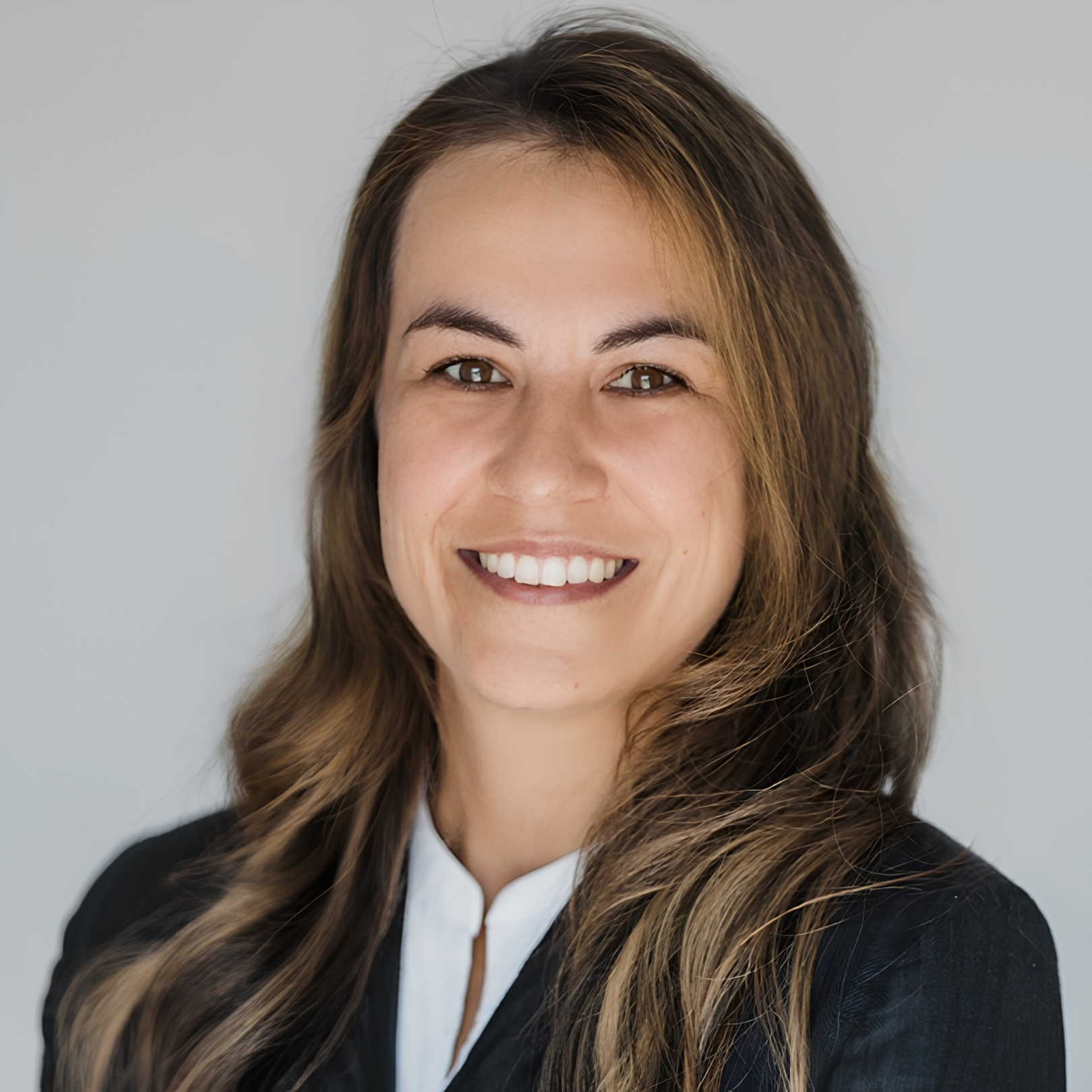
Danielle Pienaar
Independent Director
Verdant Management
Verdant Management is an independent governance and advisory firm. It works with founders, investment funds and blockchain enterprises in both traditional and digital asset markets. Its directors and advisors have no ties to corporate service providers, so the firm gives unbiased, regulation-aligned oversight that strengthens governance and protects stakeholder trust. Verdant’s core services are independent director services for traditional / digital asset funds and Web3 entities, and supervisor services for foundations. It also acts as a trusted multi-signature participant for protocols, DAOs and ventures. It also covers the orderly wind-down and liquidation of Web3 foundations and companies. The firm’s expertise spans AI, Web3, blockchain and traditional industries, and it helps businesses grow with integrity and resilience in complex, fast-changing markets.