
By Alan Smithson
AI is not a sector. It is a cost collapse moving through every sector it touches. For allocators, the next three years reward those who can see both sides of that collapse at once.
The Linear Model Is the Risk
Most allocation models still assume the next three years will look like the last five, plus or minus a rate cycle. That assumption is now the largest unpriced risk in most portfolios.
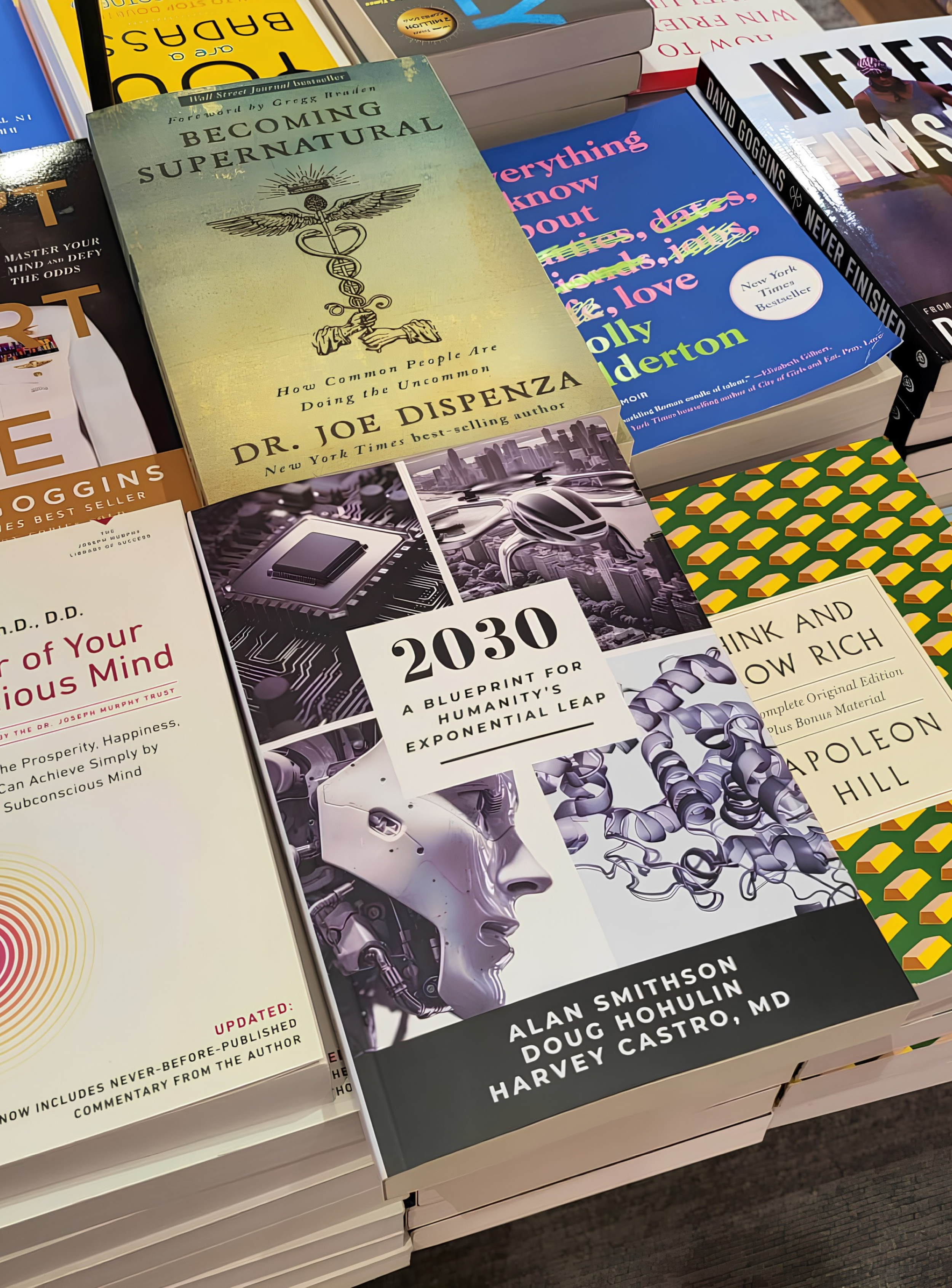
When Doug Hohulin, Dr. Harvey Castro and I wrote 2030: A Blueprint for Humanity's Exponential Leap, we set out to map what happens when a dozen technologies hit the steep part of their curves at the same time. Nearly two years after publication, the pattern is sharper, not weaker. The clearest way to see it is through unit costs. Price per mile. Price per lesson. Price per diagnosis. Price per kilowatt-hour. Price per kilogram to orbit. Each is falling, some by orders of magnitude.
Cost collapses do two things at once. They open new markets at a lower price point and strip margin from whoever owned the old one. Every opportunity below has a loser attached. The skill for the next five years is holding both in view.
A recent example is SpaceX announcing its foray into the terrestrial telecom business and wiping $39 billion off the market caps of T-Mobile, AT&T, and Verizon in one day.
One warning before the list. These ten themes look diverse. They are not. Nearly all sit on the same stack: power, compute, connectivity, and capital. A portfolio spread across all ten is far more correlated than its sector labels suggest. For readers of a magazine called Uncorrelated, that may be the most useful sentence in this piece.
1. Infrastructure: The Grid Is the Bottleneck
Every exponential story in this piece runs into the same wall. Transmission lines, substations, transformers, water rights, fibre and permitted land now set the pace of AI deployment more than chips do. Lead times on heavy grid equipment run to years. Old-economy infrastructure is meeting new-economy demand, and that is where patient capital can earn contracted, inflation-linked returns while the growth story plays out on top.
The opportunity is not in pouring concrete. It is in owning the scarce pieces: interconnection rights, powered land, and the makers of long-lead equipment like transformers and transmission equipment. The loser is anyone who still treats infrastructure as a sleepy bond proxy. Scarcity has repriced it.
2. Clean Power: The Premium Is in the Word "Firm"
In 2030, we projected that data centres could draw 8 to 10 percent of the world's electricity. Whether the final number lands there or lower, the direction is settled, and the hyperscalers have already started signing for nuclear capacity (even restarting long-closed nuclear facilities).
The investable insight is the word "firm." Solar and wind are cheap and getting cheaper, but an AI cluster wants power at three in the morning during a windless week. That favours storage, geothermal, nuclear life extensions, small modular reactors, and long-duration batteries: anything that turns cheap, clean energy into reliable, clean energy close to load. Fusion belongs in the venture sleeve, possibly another '20 years away', not the core. The losers are generators locked into long, cheap offtake contracts signed before the demand curve bent.
3. AI and Data Centres: Watch Where You Stand in the Stack
The advice here runs against the headlines. The model layer commoditizes fast; this year's frontier is next year's open-weight default (scratch that, last week's!). Enterprises have gone from 80% frontier and 20% open-weight models to 20:80 in less than 4 months!
The chip layer is concentrated, cyclical and priced for perfection. Durable value through 2030 sits at the two ends: the physical shells that deliver powered, cooled, connected capacity, and the applications that own a workflow and the data inside it.
The loser is the middle. Thin software "wrappers" will be absorbed by the platforms beneath them (Claude Legal, OpenAI Custom GPT's). Labour-heavy service models, such as call centres, outsourced back offices and junior analyst work, lose the margin that lived in the gap between human cost and price. McKinsey estimates automation could displace 400 to 800 million jobs by 2030.
Legacy enterprise software companies are not safe, either. Recently, open-source versions of Photoshop, Salesforce CRM, ERP systems, SSO, and other traditionally profitable SaaS products have been popping up daily. It's only a matter of time before
Every allocator should check each portfolio company's cost base for that gap. Then check their own.
4. Satellite Communications and Space: Value Moves Downstream
We estimate the space economy could reach $2 trillion or more by 2030. Reusable rockets broke the cost curve, and once launch gets cheap, satellites become numerous, small and replaceable. Low-earth-orbit broadband turns connectivity into a utility that reaches ships, aircraft, mines, farms and the billions of people still offline. Direct-to-phone satellite service is next.
The cost per kg has plummeted from $54,000/kg pre-SpaceX to $7,000/kg now and is falling fast. It turns out reusing rockets is a good idea!
Launch itself is dominated by one player, so the better entry for most allocators is downstream. Earth observation is becoming a data business sold to insurers, commodity traders, farmers and climate-risk desks. In-orbit servicing extends the life of expensive assets. Treat space tourism and asteroid mining as option value only. The losers are legacy geostationary operators and remote-area terrestrial telecom.
5. Tokenization of Real-World Assets: New Plumbing for Old Assets
This is the theme closest to home for a Cayman readership. In 2030, we argued that tokenized real estate, commodities, credit and equities will unlock trillions in trapped liquidity. Strip away the crypto/web3 noise and tokenization is plumbing: a share register that settles in minutes and carries its own rules for compliance, transfer and distributions.
For managers, that means tokenized treasuries and money market funds used as collateral, private credit and fund interests with a real secondary market, and lower minimums that open the wealth channel. Jurisdictions that host the world's funds have a direct stake in who writes the standards. The losers are intermediaries whose fee is reconciliation. Legal enforceability, custody and interoperability are still maturing, so the right move now is a pilot, not a pivot.
6. Longevity: An Asset and a Liability
The 2030 healthcare thesis is a shift from reactive to predictive care. Ageing populations are the biggest demand shock in medicine, and AI is cutting the cost and time of drug discovery and diagnosis. Metabolic drugs have already shown that a single drug class can reprice whole sectors, from food to medical devices.
The investable core is AI-driven discovery, continuous monitoring and diagnostics. Therapies that target ageing itself remain long-dated, binary bets. The part most allocators miss sits on the other side of the ledger. If people live meaningfully longer, actuarial assumptions break. Pension funds, annuity writers and life insurers carry longevity as a liability, and endowments that fund retirees inherit the same exposure.
The opportunity isn't to build more seniors' homes; it's to build exciting, dynamic communities where people thrive, not merely survive.
7. Robotics: Discount the TAM, Not the Trend
In our book, we forecast as many as a billion robots on Earth by 2033 to 2035. We also showed how easily the numbers run away: scaling Morgan Stanley's estimate of $357 billion in impact from eight million robots up to a billion robots gives $44 trillion, which we flagged as an overestimate. That honesty is the lesson. Robotics TAMs get extrapolated; underwrite deployments instead.
What is real is that AI gave robots general-purpose brains while hardware costs fell and labour shortages deepened in ageing economies. Near-term value is in warehouses, logistics, manufacturing, agriculture, and inspection, often sold as robots-as-a-service. Humanoids at scale are a later story. The loser is the labour-cost arbitrage that has driven decades of offshoring.
The long tail opportunity comes when robots make robots.
8. Autonomous Ground and Flying Taxis: Explosive Economics, City by City
Our book cites ARK Invest's analysis that ride-hailing could grow from $300 billion to over $11 trillion by 2030 as cost per mile falls, with the largest pool of demand opening near 25 cents a mile. In the same chapter, we were more cautious: fully self-driving vehicles will not be everywhere by 2030. Both views hold. The economics are explosive once the system works, but rollout happens one city and one regulator at a time. Robotaxis are already carrying paying passengers in a growing list of cities, and Dubai is building for electric air taxis.
The quieter plays are fleet depots, charging, mapping, vertiports and insurance data. The losers sit across the car-ownership economy: dealerships, parking real estate, personal auto insurance, and the auto loans packed inside asset-backed securities. Credit desks should be modelling that tail now.
9. Vertical Farming: The Second Wave
The first wave of vertical farming burned capital, and several high-profile operators failed in 2023. The 2030 thesis still stands, but the business model has changed. Climate volatility, water stress and food security are pushing production closer to people. LEDs and automation keep getting cheaper. AI now runs climate control crop by crop.
The second-wave winners will skip commodity lettuce. Look for high-value and pharmaceutical crops, sovereign-backed food security projects in import-dependent regions, and farms that share sites with data centres to use cheap power and waste heat. Island and desert economies that import most of their food are natural first buyers.
10. Personalized Education: Tutoring at the Price of Software
One-to-one tutoring has long been shown to lift results dramatically, but it never scaled because people are expensive. AI removes that constraint.
(Disclosure: I founded an AI education company, so weigh this section with that in mind.)
This one is close to my heart as we built Unlimited Awesome, a new education system designed for the intelligence age. We wrote that by 2030 every student will likely have a personal AI mentor. We believe that students globally shouldn't have to wait that long.
We are already seeing the beginnings of a fundamental shift in education: personalized learning is becoming accessible at software prices, and the traditional model of education is facing an existential question. If AI can deliver individualized instruction, adapt to each student's needs, and help them develop practical skills, what exactly are we paying for in a traditional education?
The perceived value of college and university degrees is also under pressure. Rising tuition, student debt, and questions about graduate employability are forcing families to reconsider the return on investment. As AI accelerates the shift toward skills-based hiring, a prestigious credential alone may no longer command the premium it once did. The question is moving from Where did you study? to What can you actually do?
This doesn't mean universities become irrelevant. They will continue to offer research, deep academic study, professional accreditation, and valuable human networks. But institutions that rely primarily on credentials, rather than demonstrable learning and outcomes, face growing pressure to justify their cost.
The value accrues to platforms that own learner outcomes and to credentials that prove skills rather than seat time. Corporate re-skilling becomes urgent as automation reshapes roles. The losers are test prep, legacy textbook publishing, and mid-tier credentials whose main product was the signal, not the learning.
What Allocators Should Do Now
Start with an exponential stress test. For every holding, name the unit cost that AI or automation is collapsing in its market, then ask one question: is this company a buyer of that cost or a seller of it? Buyers widen margins. Sellers lose them. Most portfolios hold more sellers than their managers realize, especially in services, consumer credit and real assets tied to old usage patterns.
Next, map the hidden correlation. Ten themes can collapse into three or four underlying factors: power prices, compute supply, the cost of capital and regulatory speed. A delay in grid interconnection hits data centres, robotics, vertical farms and autonomous fleets at the same time. Size positions by those factors, not by sector labels, and look for the few exposures that truly move on their own.
Third, underwrite curves, not market sizes. Our own book shows how quickly a TAM can run to absurd numbers. Milestones are more honest: cost per mile, cost per kilowatt-hour, cost per kilogram to orbit, cost per learner outcome. Tranche capital against those milestones and you turn hype into a schedule you can bank on.
Fourth, own the bottleneck and rent the narrative. Scarce physical assets such as powered land, grid connections, long-lead equipment, and spectrum hold value regardless of which model or platform wins. Crowded stories can be held through liquid instruments and sized small.
Finally, adopt the tools yourselves. A manager who will not use AI in research, risk and operations, or who will not pilot a tokenized share class, will be priced out by one who does. The exponential age does not wait for the investment committee calendar.
In 2030 we wrote that this decade could set us on course for a Star Trek future of exploration and shared progress, or a Star Wars future of conflict and waste. Technology does not choose between them. Capital does. And allocators decide where capital goes.
Choose wisely.
Alan Smithson
Co-Founder & CEO
Unlimited Awesome
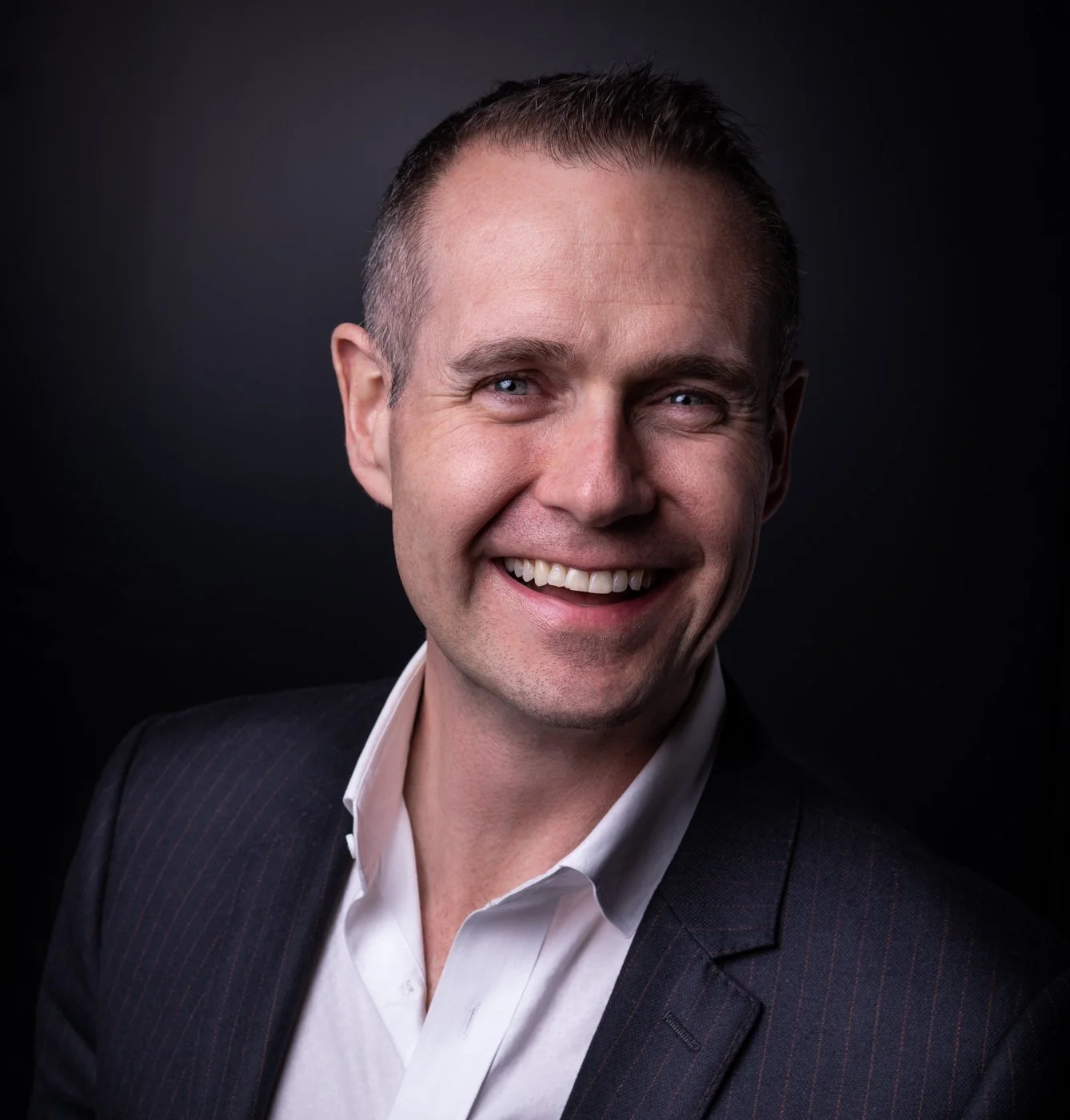
Alan Smithson is a technology pioneer and Founder of Unlimited Awesome, an AI-native education platform and METAVRSE®, and a boutique advisor on exponential growth. He co-authored 2030: A Blueprint for Humanity's Exponential Leap (University of Toronto Press, 2025) with Doug Hohulin and Dr. Harvey Castro. Alan is a TEDx, SXSW, and CES speaker and has been featured in Harvard Business Review, MIT Technology Review, Forbes and The Economist. He is also a house music DJ under the name Lord Alan.